 Michelle Thompson
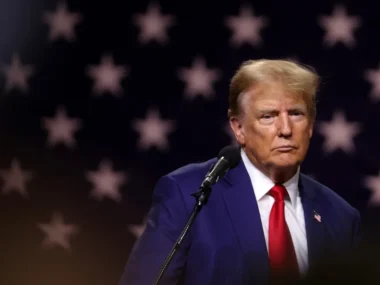
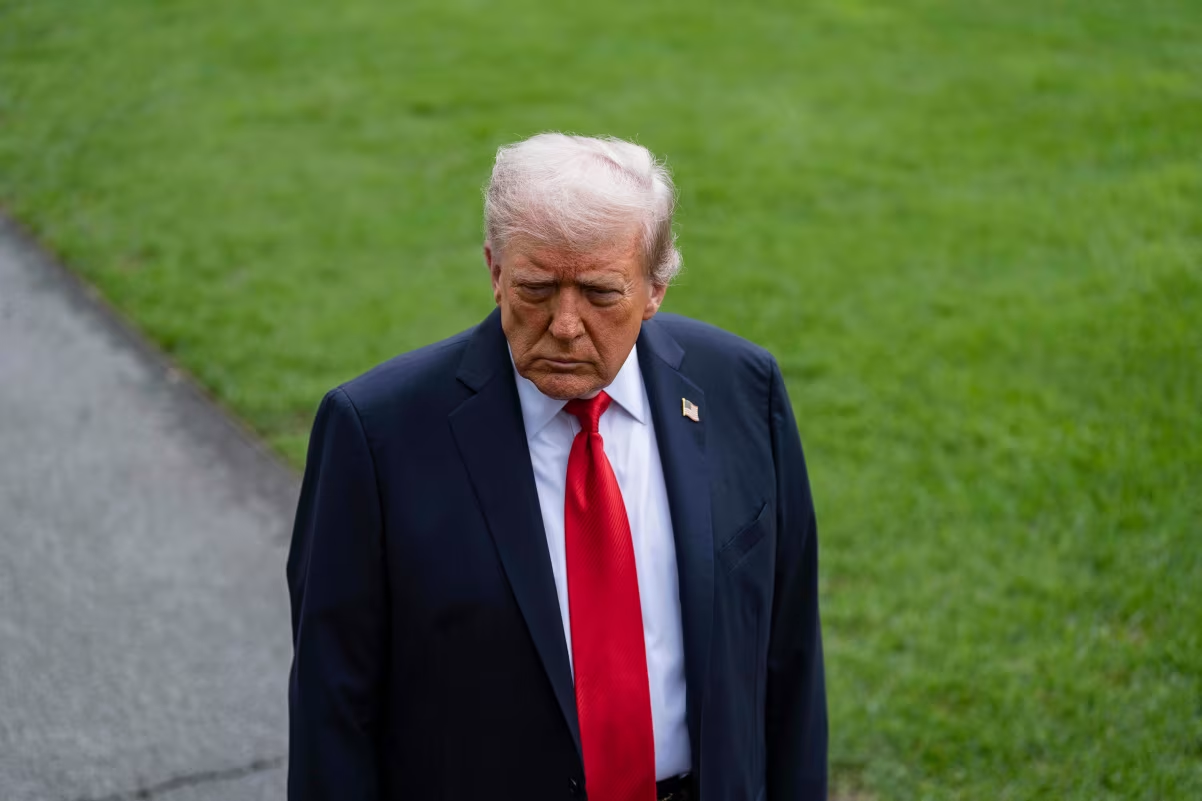
President Donald Trump continues to project an image of apocalyptic authority in the United States, even as some of the negative consequences of his key policies become evident.
Over the weekend, Trump shared a meme threatening to take action in Chicago, the next Democratic city targeted in his crime and immigration crackdown. The post followed a familiar Trumpian formula: portraying himself as a strongman willing to wield force, provoking liberal outrage while energizing his base. Its menacing tone also suggested a view of the presidency as a personal power tool rather than a constitutionally constrained office.
Beneath the rhetoric, however, there are indications that Trump’s second administration, eight months in, is entering a new phase. His rapid-fire policy moves and constitutional tests have caused disorientation: courts struggled to respond, and Democrats, still reeling from their election loss, have struggled to formulate a coherent counterstrategy. Meanwhile, Trump’s policies on the economy, public health, and foreign affairs are beginning to generate political blowback. Democratic governors such as California’s Gavin Newsom and Illinois’ JB Pritzker are seizing opportunities to push back, enhancing their political profiles. Last week, Trump faced significant court setbacks, including challenges to his policy priorities. A pending Supreme Court decision on his tariff policies could force the government to reduce refund checks for half of the tariff revenue—a move Treasury Secretary Scott Bessent warned could be “terrible” if the government loses.
In response, the White House has doubled down on disruption and executive power grabs, reflecting Trump’s familiar playbook. A recent action against Caribbean drug cartels illustrates this approach: U.S. forces destroyed a speedboat off Venezuela allegedly carrying traffickers. Officials justified the operation with aggressive claims of authority, with Defense Secretary Pete Hegseth stating, “We have the absolute and complete authority to conduct that,” without providing constitutional justification.
Although the boat may have been operated by the Tren de Aragua gang, presidents do not have the constitutional power to wage war without informing Congress or the public. Vice President JD Vance amplified the populist tone by dismissing criticism on social media, prompting Republican Sen. Rand Paul to call the remarks “despicable and thoughtless” for glorifying killings without due process.
Observers note that incidents like the Venezuela operation can act as “distractions” from Trump’s political vulnerabilities. Yet there is a growing concern that these distractions themselves pose constitutional risks, raising questions about when a diversion crosses the line into undermining the rule of law.
Difficult Months Ahead for Politics
Setting aside inflammatory social media posts and military theatrics—Trump has even suggested Defense Secretary Pete Hegseth be called “secretary of war”—there are signs that the administration is entering politically hazardous territory.
Trump’s first-term economy, which offered voters a sense of security before COVID-19, helped secure his election last year. However, “Trump economy 2.0,” shaped by his unconventional views on trade and government intervention, is now struggling amid uncertainty. Friday’s jobs report painted a grim picture: only 22,000 positions were added in August, June showed negative job growth, unemployment rose to 4.3%—its highest level since 2021—and Trump’s tariffs and immigration policies have hindered hiring.
By many metrics, the Biden economy currently outperforms Trump’s. The manufacturing sector has been particularly hard hit, ironically undermining Trump’s trade war strategy aimed at reviving a 1950s-style industrial boom.
For everyday Americans buying groceries, Trump’s claims of falling prices ring hollow. If this disconnect continues, it could have consequences similar to the mischaracterization of inflation as “transitory” under Biden, which hurt his reelection prospects.
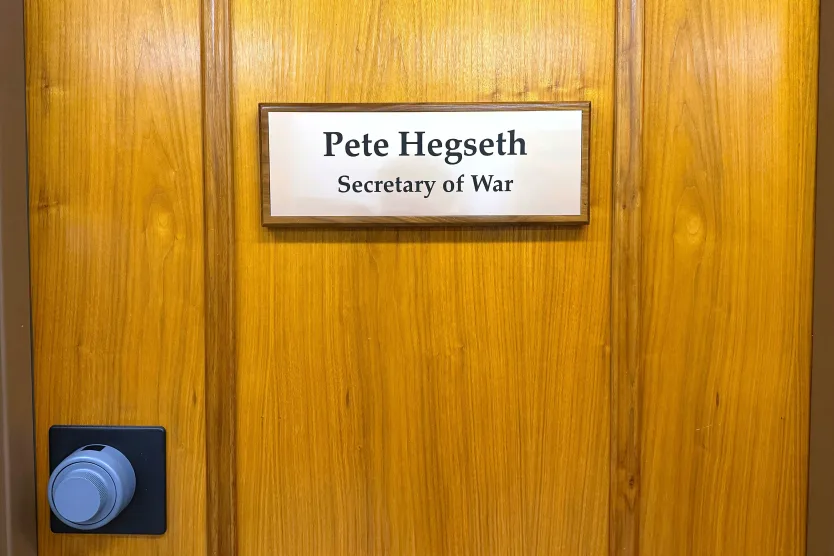
A newly installed sign at the Pentagon in Washington, DC, Friday follows President Trump’s executive order to rename the Department of Defense as the Department of War. (Mike Pesoli/AP)
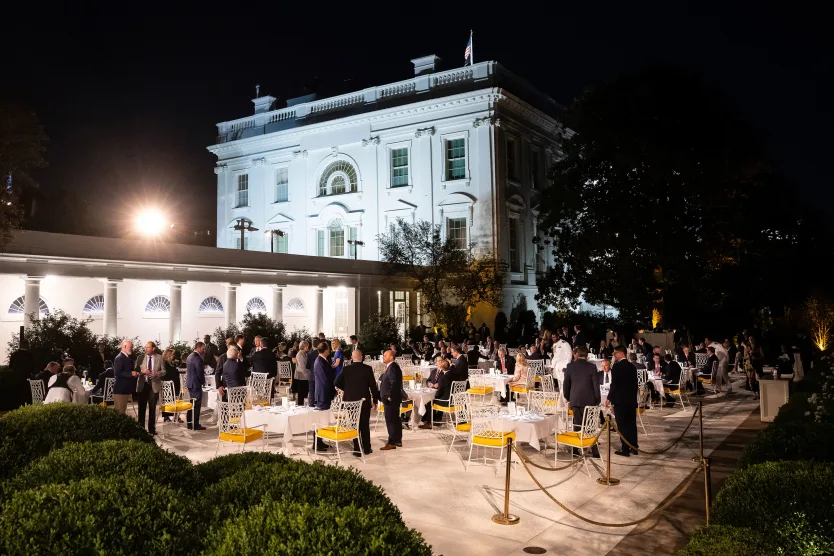
President Trump hosted a dinner with administration officials and members of Congress in the newly renovated White House Rose Garden on Friday. (Francis Chung/Politico/AP)
Health and Human Services Secretary Robert F. Kennedy Jr.’s dramatic display during a Senate hearing last week highlighted potential disruptions to public health, raising concerns about whether Trump’s election signals voter support for rolling back vaccine progress and risking new epidemics this winter.
In foreign policy, Trump faced embarrassment after his summit with Russian President Vladimir Putin, underscored by the weekend’s massive air assault on Kyiv, the war’s largest yet. Questions remain about whether Trump fully recognizes that Putin is not committed to peace. The president indicated Sunday he is prepared to impose tougher sanctions on Russia, though previous threats have gone unfulfilled. Trump also questioned whether India was “lost” to the U.S., after his tariffs pushed the long-sought ally closer to China.
The administration suffered additional setbacks in the courts last week. A judge ruled that Trump’s June deployment of the federalized National Guard to California “willfully” violated the law, coinciding with a large military parade in China that highlighted President Xi Jinping’s domestic power. Another ruling found Trump’s use of the Alien Enemies Act to deport Venezuelan gang members illegal in several Southern states. Additional decisions blocked $2 billion in withheld funding to Harvard University and temporarily preserved the legal status of over a million Haitians and Venezuelans living in the U.S.
Why Supporters of Trump Believe His Administration is Still Strong?
The administration pays little heed to lower court rulings, often arguing—sometimes with justification—that cases will fare better in more conservative appeals courts or before a Supreme Court inclined to interpret executive power broadly. Supporters, meanwhile, view the political landscape through a different lens.
Since taking office, Trump has wielded executive authority aggressively, defying courts and challenging public health, military, legal, educational, and media institutions. For many MAGA supporters, this confrontational style is a feature, not a flaw. Florida Surgeon General Dr. Joseph Ladapo highlighted this on CNN’s State of the Union Sunday: “I have tremendous respect for who he is. And a lot of people have tried to really, really make life very difficult for him. And he’s emerged and he’s been a terrific leader and a terrific symbol for many, many Americans.”
Despite Ladapo’s efforts to end Florida’s school vaccine mandates, Trump expressed skepticism, stating Friday: “You have vaccines that work; they just pure and simple work. They’re not controversial at all, and I think those vaccines should be used.”
Cabinet members like Defense Secretary Pete Hegseth, a former Fox News anchor, are attuned to the priorities and sentiments of Trump’s base.
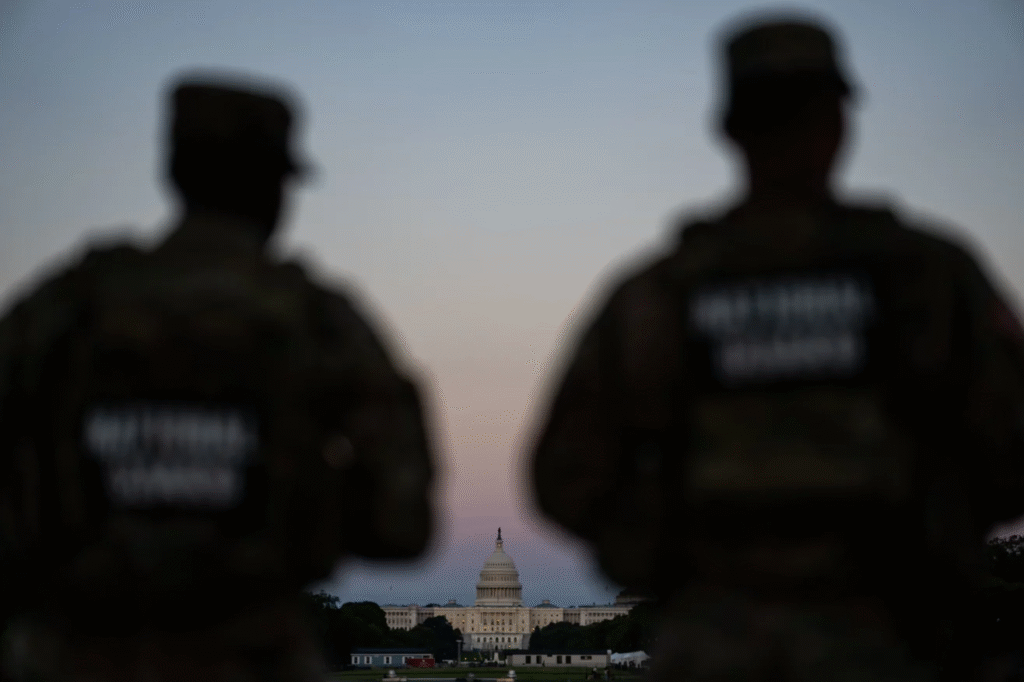
Silhouetted National Guard members stand at the Washington Monument on September 2.
Hardline rhetoric and forcing liberals to argue that alleged drug traffickers could be victims of war crimes can play well politically. Deploying National Guard troops to Democratic cities such as Los Angeles, Chicago, and Washington, DC—areas struggling with high crime and homelessness—also has political appeal.
“Thank God President Trump called the National Guard in to bring peace,” said Trump’s border czar, Tom Homan, on State of the Union, crediting reservists with reducing crime rates. His remarks highlight the political calculation: while the presence of soldiers on city streets may raise concerns—especially when some appear underutilized, picking up trash during a $1-million-a-day deployment—voters might come to see their presence as reassuring. The question remains whether the perceived safety and lives saved justify the costs.
Trump also benefits from the reality that compliant Republicans on Capitol Hill are unlikely to challenge him, even as his actions in Venezuela and on trade encroach on congressional authority.
When scrutiny arises, the White House often declares victory. While Trump’s claims of ending seven wars may be overstated and his trade deals vague, the messaging is politically appealing.
Low Poll Numbers Continue to Trouble Trump
New polls on Sunday show Trump’s approval rating lingering in the low to mid-40s, with the latest CNN Poll of Polls putting him at 43%. Historically, such numbers pose a threat for Republicans with midterms just over a year away. Yet Trump has often maintained similarly low ratings during his White House years, particularly when he has focused on energizing his base rather than governing broadly, so the West Wing may not be alarmed. Still, this is a fragile starting point if the economy falters. The key question is whether Trump’s loyal base can sustain him if inflation rises, unemployment increases, and economic uncertainty spreads.
In the short term, Friday’s jobs report could offer political relief by prompting larger-than-expected interest-rate cuts from the Federal Reserve. However, Trump’s long-term attempts to undermine central bank independence remain a risk. If he pushes for massive rate cuts next year after the Fed chief’s term ends—whom he has nicknamed “Too Late” Jerome Powell—prices could soar.
The response from Trump’s economic team to the jobs report was scattered. Treasury Secretary Scott Bessent called August the “noisiest” month statistically on NBC. National Economic Council Director Kevin Hassett described it as “dissonance in data” on CBS’ Face the Nation. Commerce Secretary Howard Lutnick predicted on CNBC that strong jobs numbers would emerge “six months to a year from today.” For Americans currently losing jobs, such forecasts offer little reassurance.
None of the officials addressed the larger issue: the economic consequences of Trump’s unconventional trade policies, which many experts consider unrealistic.
If the economy remains resilient, Trump may weather the storm. If not, voters will see whether he can truly defy political gravity—a scenario where even a meme of Bill Kilgore, the amoral protagonist of Apocalypse Now, offers no political cover.


 Emily Martinez