 Michelle Thompson
Oil prices have dropped to their lowest level in two weeks after Israel accepted US President Donald Trump’s ceasefire proposal with Iran.
However, business leaders attending a major economic summit in Tianjin, a northern Chinese port city, remain concerned about the global economy and the chances for significant growth.
The rapid intensification of the Iran-Israel conflict, which has now involved the United States, briefly overshadowed issues like trade, tariffs, and inflation—topics that carry broad implications.
“This is the most complex geopolitical and geo-economic environment we’ve seen in decades,” said Borge Brende, president and CEO of the World Economic Forum (WEF), ahead of the event known as “Summer Davos.”
“If we fail to reignite growth, we risk facing a decade of sluggish economic expansion.”
The WEF has traditionally championed free trade and globalization, but President Trump’s tariff disputes have disrupted supply chains and made it difficult for businesses to plan ahead.
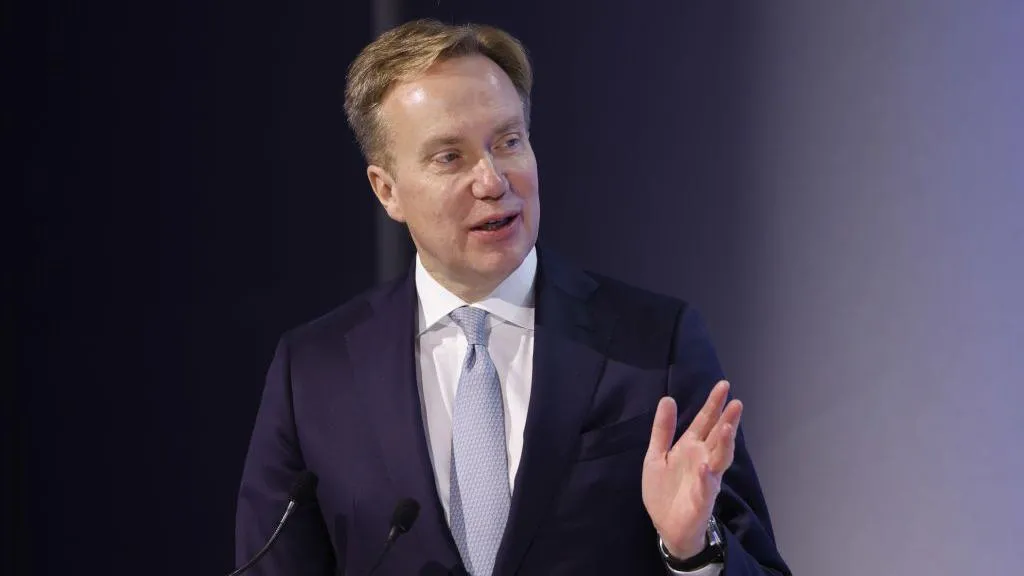
Borge Brende, president and CEO of the World Economic Forum, cautioned that we could face a decade of slower economic growth.
Jeffry Frieden, professor of international and public affairs and political science at Columbia University, states, “We live in a time of radical uncertainty.”
He explains that businesses must understand the changes of recent years as we transition from what he sees as the end of an era in international economic and political affairs into a new phase.
Geopolitical risks carry major consequences for the global economy.
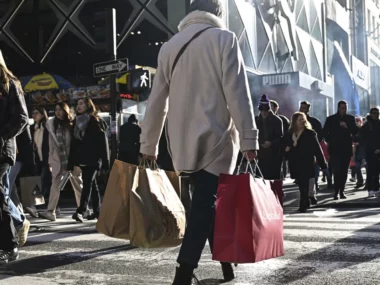
Rising oil prices increase energy costs for manufacturers, which may eventually be passed on to consumers. This can reduce spending as higher prices suppress demand. Persistent inflation also makes central banks hesitant to lower interest rates.
Tensions can cause further economic losses through factors like flight rerouting and tourism disruptions.
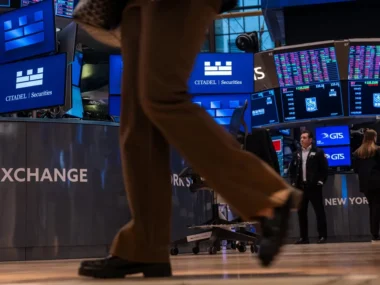
Investor anxiety over uncertainty can trigger market sell-offs and a flight to safe-haven assets such as gold and the US dollar.
Iran’s threat to close the Strait of Hormuz — a vital shipping lane handling about a quarter of the world’s oil supply — poses a particular risk to China, which reportedly imports 90% of its Iranian oil.
Chris Torrens, head of China at the advisory firm APCO, notes that some of China’s major machinery sectors, including emerging high-tech industries supported by Beijing, remain dependent on oil.
“Any disruption to that oil supply will be a significant concern for Beijing,” he says.
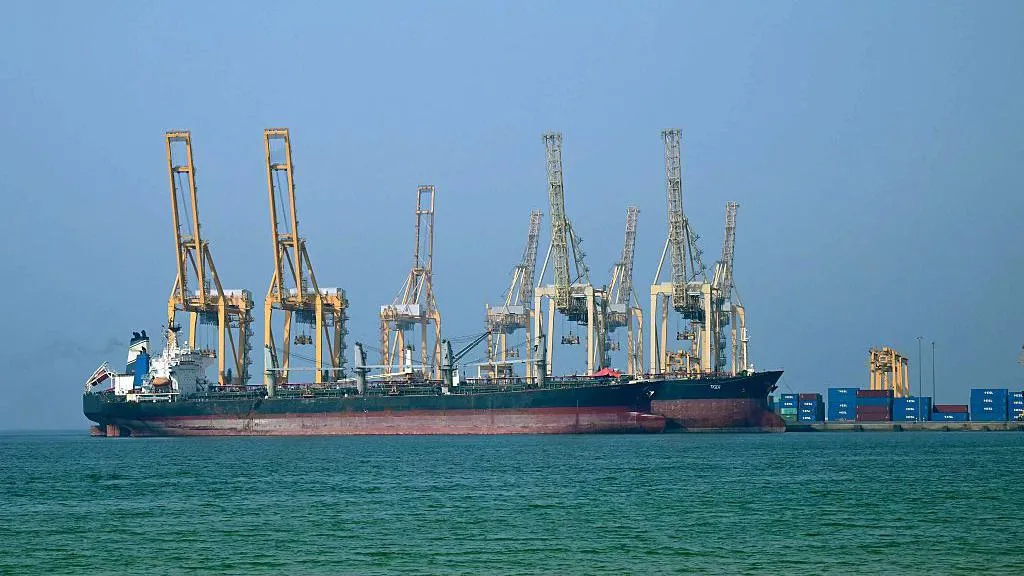
Iran’s warning to shut the Strait of Hormuz, a vital oil shipping corridor, has sparked widespread global alarm.
The WEF gathering arrives at a crucial time for China’s economy, which has long faced challenges like a prolonged property crisis, high unemployment, and weak domestic consumption.
In response, Beijing has introduced several measures to boost economic activity.
So far, China is still meeting its official growth target of about 5%, with economists estimating that the country could contribute nearly 30% of global growth this year.
Mr. Torrens observes that Chinese officials see this as an opportunity, suggesting that the WEF event is, in a way, China opening its doors.
“I believe the US is providing China with a significant PR platform to position itself as a defender of globalization,” he says. “Calling China a stronghold of free trade remains a work in progress due to ongoing market access issues, but China is eager to assert itself regionally and globally.”
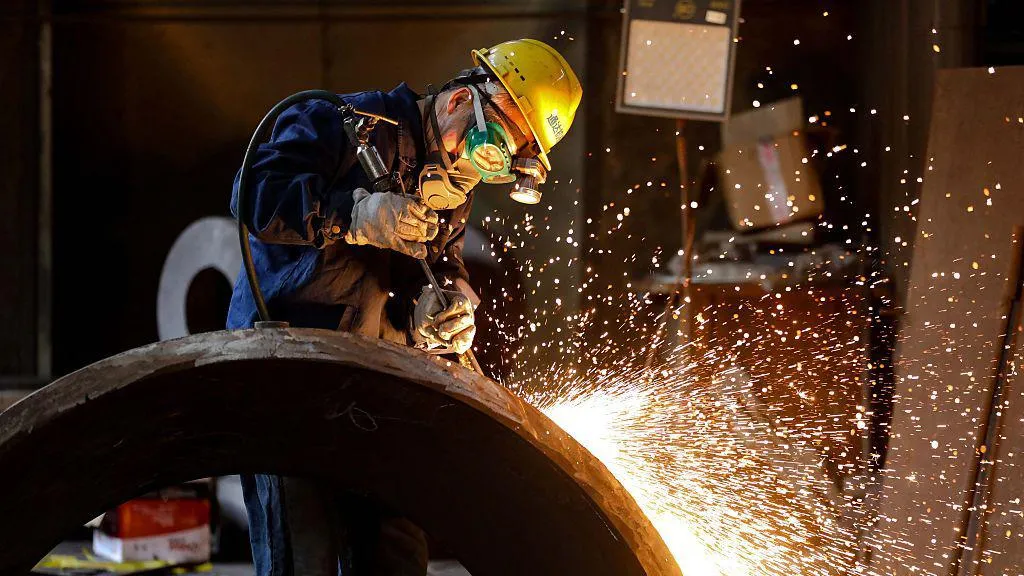
Amidst the threat from Trump’s trade war to its export-driven manufacturing sector, Beijing is turning to emerging technologies like Artificial Intelligence (AI) as new engines of growth.
“Trade has driven growth over the past couple of decades, but it’s clear that certain technologies hold great potential for fostering new growth and competitiveness,” said Mirek Dusek, managing director at WEF.
PwC estimates that AI could increase global growth by 15% by 2035.
Yet, tariffs remain a pressing concern for business leaders at the WEF, as they seek partnerships and navigate a volatile economic landscape.
With Trump’s temporary suspension of major reciprocal tariffs set to expire soon, the future global business environment remains uncertain.
“It’s very challenging for companies to plan long term,” explains Mr. Frieden. “Without clarity on tariff levels, businesses can’t decide whether to relocate to the US or maintain operations abroad—regardless of whether they are American or international corporations.”