 Michelle Thompson
A group of 12 US states has filed a lawsuit seeking to block President Donald Trump’s series of tariffs that have disrupted global trade. Led by New York’s governor and attorney general, the suit argues that the president did not have the authority to impose these tariffs, noting that such levies require approval from Congress.
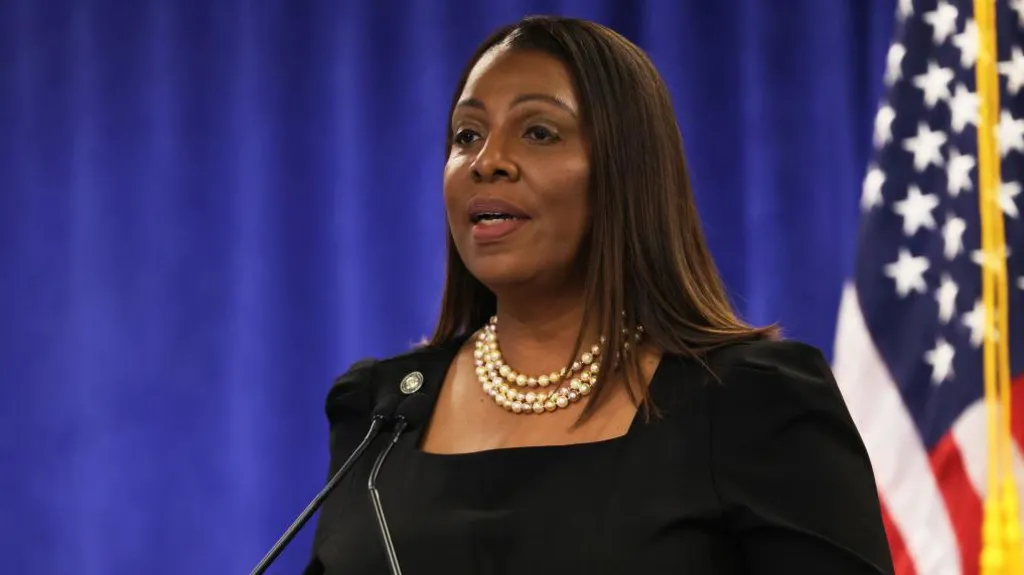
The lawsuit, submitted to the United States Court of International Trade, claims that the tariffs are unconstitutional. The White House responded by accusing New York Attorney General Letitia James of focusing on a “witch hunt” against Trump rather than protecting the public. Spokesman Kush Desai emphasized the administration’s commitment to using its legal authority to address national issues like illegal immigration and the fentanyl crisis, as well as the growing trade deficit.
The legal challenge questions Trump’s use of the International Emergency Economic Powers Act (IEEPA), a 1970s law, to justify the tariffs. The suit argues that this law does not provide the president with the power to impose tariffs. It further claims that Trump’s actions have disrupted the constitutional order and harmed the economy.
Trump invoked the IEEPA to impose tariffs on countries like China, Mexico, and Canada, claiming it allows him to address national security or economic threats that originate outside the US. However, the lawsuit contends that this law has never been used for tariffs by any prior president.
Additionally, California has filed its own lawsuit against the Trump administration over the tariffs, asserting that the IEEPA doesn’t grant Trump the power he claims. Other lawsuits have also challenged the president’s authority to use the IEEPA for this purpose.
Trump’s tariffs were implemented as part of his effort to address what he perceives as a trade deficit with other countries. In April, he introduced “reciprocal” tariffs on nations worldwide, but following market backlash, he paused the tariffs for 90 days and reduced the rate to 10% for most countries. This pause did not apply to China, which he accused of retaliating, and the US imposed a 145% tariff on Chinese goods, escalating tensions and shaking global markets. On Wednesday, Trump expressed hope for a deal with China, acknowledging that the 145% tariff was “very high.”
The White House has also implemented 25% tariffs on certain goods from neighboring countries, Mexico and Canada.